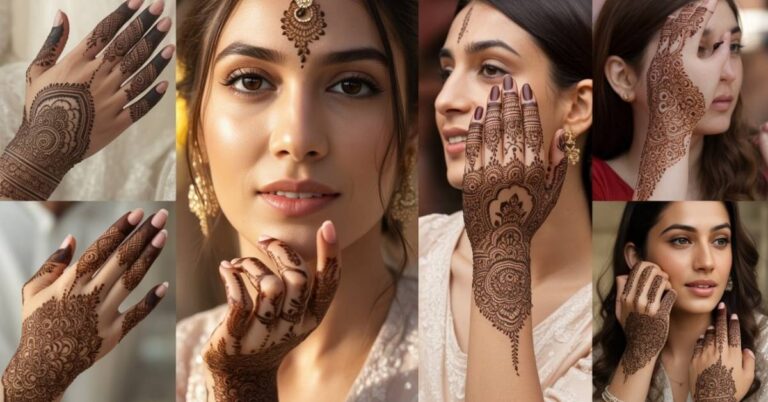
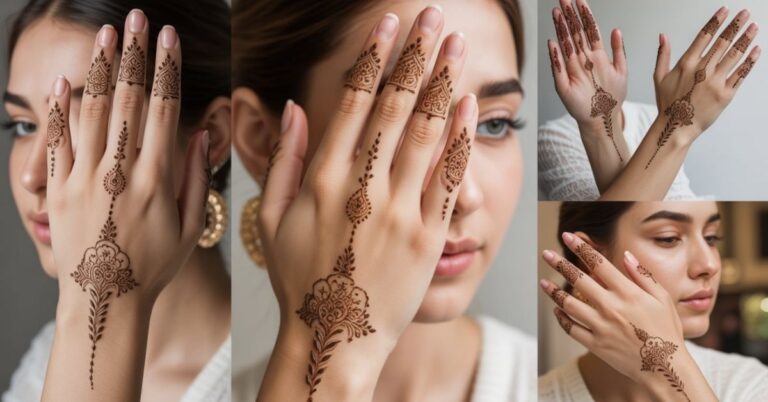
Beautiful Front Hand Simple Mehndi Design That Anyone Can Try
Mehndi has captivated hearts across continents for centuries. What started as an ancient tradition in South Asia and the Middle East has blossomed into a beloved art form throughout the India. Women everywhere now embrace front hand mehndi designs for weddings, festivals, and celebrations.
The intricate patterns tell stories, carry cultural significance, and transform hands into living canvases. Whether you’re attending your first Indian wedding or simply love the aesthetic appeal of henna art, simple front hand mehndi offers an accessible entry point into this mesmerizing tradition.
This comprehensive guide walks you through stunning designs that anyone can master. You’ll discover everything from minimal front hand mehndi to elaborate bridal patterns. We’ve gathered the latest front hand mehndi design trends alongside timeless classics.
Simple Front Hand Mehndi Designs
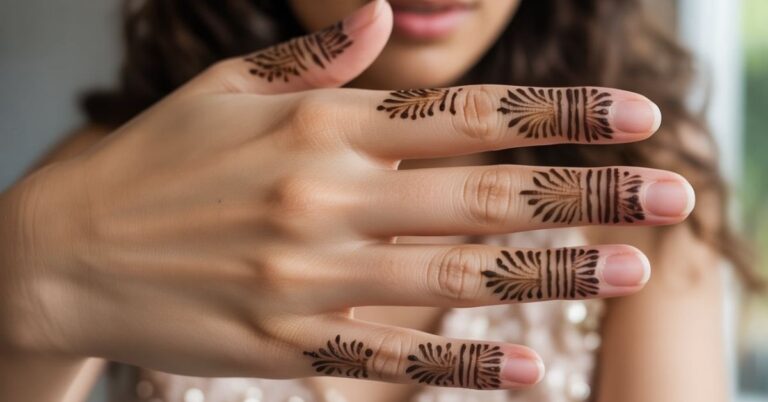
Easy front hand mehndi design options provide the perfect starting point for beginners. These patterns focus on clean lines, basic shapes, and manageable coverage areas. You don’t need years of practice to create something beautiful. Simple designs typically feature larger elements with minimal intricate filling.
The beauty of front hand simple mehndi design lies in its versatility and forgiveness. Small imperfections blend naturally into the overall pattern. You’ll need basic tools: fresh mehndi paste in a cone, tissue paper, and lemon-sugar solution for sealing. Start with designs that have clear focal points and symmetrical elements. Practice drawing the main shapes on paper before applying to skin.
Lotus Motif Front Hand Simple Mehndi Design
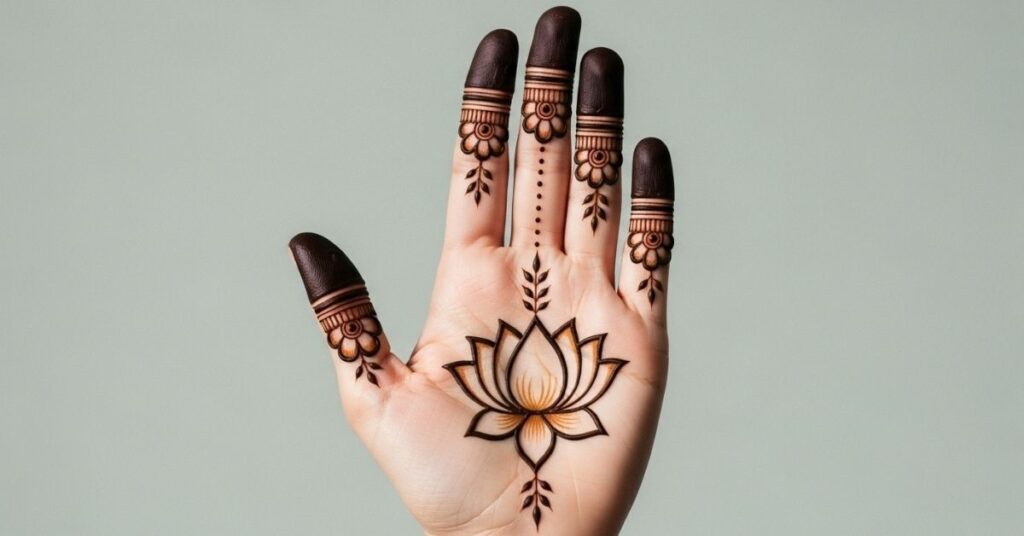
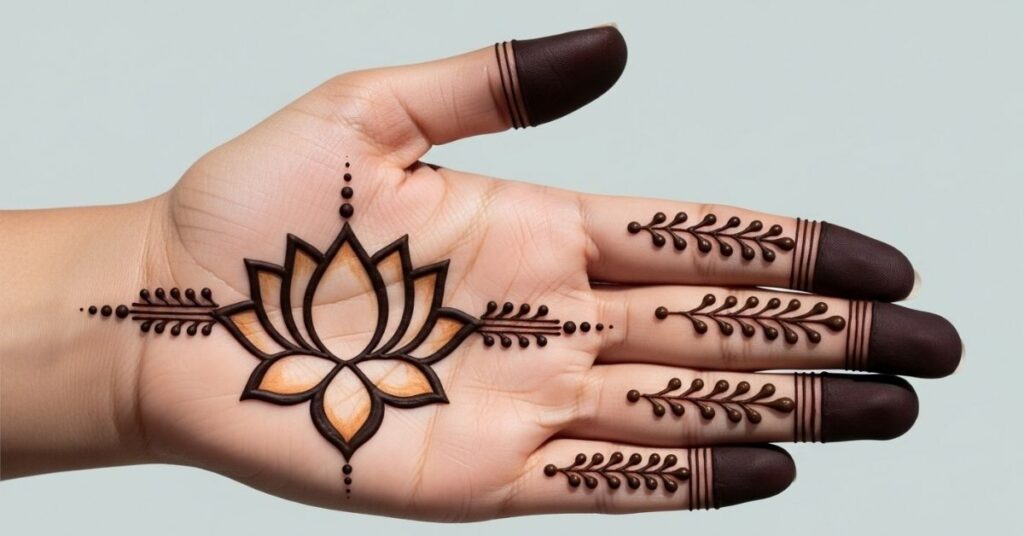
The lotus front hand mehndi stands as one of the most spiritually significant and visually stunning motifs available. This sacred flower symbolizes purity, enlightenment, and rebirth across multiple cultures. When placed on the front hand, a lotus creates an elegant focal point that draws the eye naturally.
Creating a lotus design requires patience but not necessarily advanced skills. Begin by marking a small circle in your chosen location this becomes the flower’s center. Draw the first layer of petals around this circle, keeping each petal roughly the same size. Add a second layer between the gaps of the first layer.
Continue building outward until you’ve achieved your desired lotus size. Fill the center with dots, small circles, or geometric patterns. The entire lotus front hand mehndi takes approximately 15-20 minutes for a medium-sized design. Surround your lotus with leaves, vines, or paisley shapes to create a complete composition that showcases intricate floral and geometric motifs.
Mesmerizing Mandala Front Hand Mehndi Design
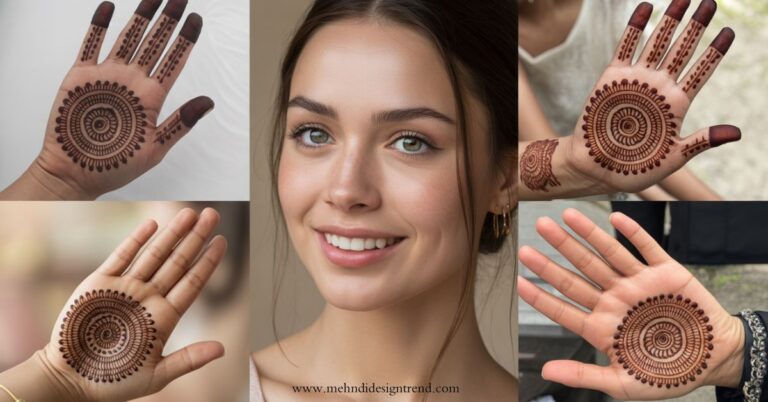
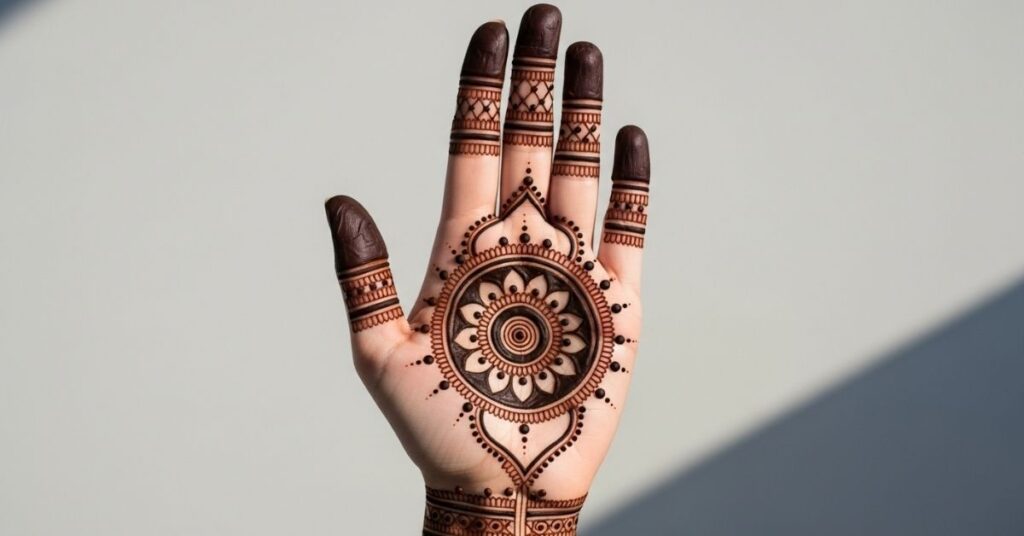
Mandala front hand mehndi designs capture attention through their hypnotic circular patterns and perfect symmetry. These geometric wonders originate from Sanskrit, where “mandala” means circle. In mehndi art, mandalas represent the universe, wholeness, and harmony.
The concentric circles and radiating patterns create a sense of movement even in stillness. Mandala designs work exceptionally well on the back of the hand, where the circular space provides an ideal canvas. However, creative artists also place them on palms for a bold statement.
Regal Peacock Front Hand Mehndi Design
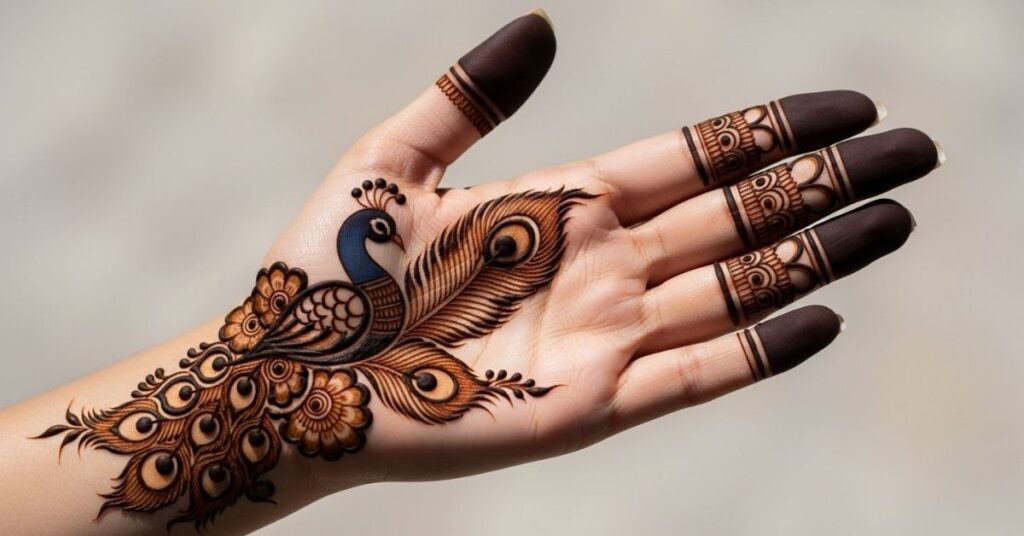
Peacock front hand mehndi embodies grace, beauty, and royal elegance in henna art. The peacock holds special significance in Indian and Pakistani cultures as a symbol of immortality and spiritual awakening. These birds appear frequently in royal mehndi inspired by Indian art because of their association with royalty and divine beauty. A peacock design can stretch from your wrist to your fingertips, creating a stunning visual narrative. The flowing tail feathers allow for creative expression through varying patterns and fills.
Creating a peacock starts with sketching the bird’s distinctive body shape and head profile. Position the peacock sideways on your hand, with the head near your wrist or fingers depending on your preference. Draw the graceful neck and small head with its characteristic crest. Add fine lines between feathers for depth. Complete your peacock front hand simple mehndi design by surrounding the bird with intricate floral and geometric motifs like flowers, leaves, and paisley shapes.
Floral Motifs Front Hand Mehndi Design
Floral front hand mehndi remains eternally popular because flowers universally represent beauty, life, and celebration. Different flowers carry distinct meanings and aesthetics in mehndi art. Roses symbolize love and romance, making them perfect for mehndi designs for weddings and festivals. Lotus flowers represent spiritual purity. Jasmine signifies grace and elegance. Sunflowers bring cheerful, bold energy to designs. You can mix multiple flower types within one design or dedicate your entire pattern to a single bloom for cohesive impact.
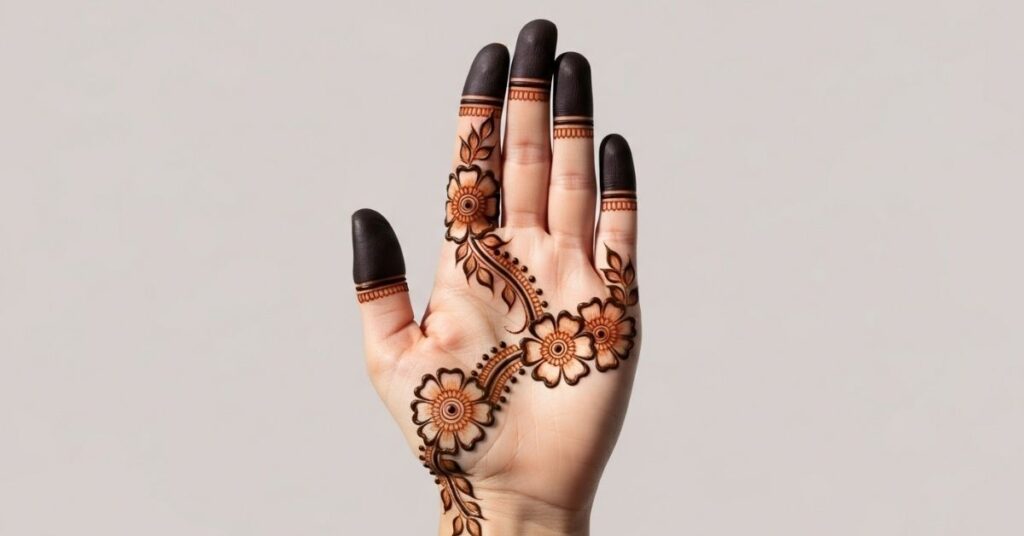
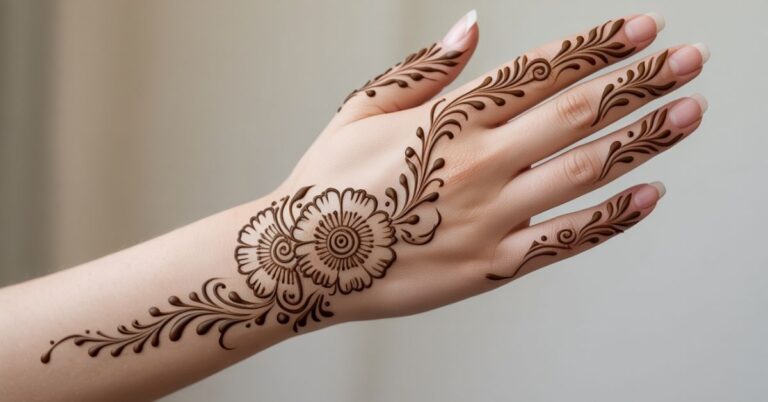
Executing floral front hand mehndi gives you tremendous creative freedom. Start by deciding your flower placement will they cascade down from your wrist, cluster at your palm center, or dance across your fingers? Draw each flower with attention to petal count and shape. Five-petaled flowers offer simplicity, while roses with layered petals provide complexity. Connect your flowers with vines, leaves, and small buds to create flow between elements. Fill empty spaces with dots, small paisleys, or geometric shapes. The elegant and stylish mehndi patterns created through thoughtful floral arrangements suit any occasion. These fashionable mehndi trends for women adapt beautifully whether you want minimal yet elegant mehndi styles or elaborate full-coverage designs.
Symmetrical Bliss Front Hand Mehndi Design
Symmetry creates instant visual harmony that pleases the eye and elevates mehndi from casual decoration to professional-looking art. Graceful and symmetrical mehndi layouts demonstrate skill and attention to detail. When both hands mirror each other perfectly, the effect becomes even more striking. Symmetrical designs work wonderfully for formal occasions like weddings where polished perfection matters.
The balanced nature of these patterns also makes them forgiving if you make a mistake on one side, you’ll repeat it on the other, creating intentional symmetry rather than obvious error. Achieving symmetry requires planning before you begin applying mehndi. Mentally divide your hand into equal sections. Mark key reference points lightly if needed. Start your design at the center line and work outward in both directions simultaneously when possible.
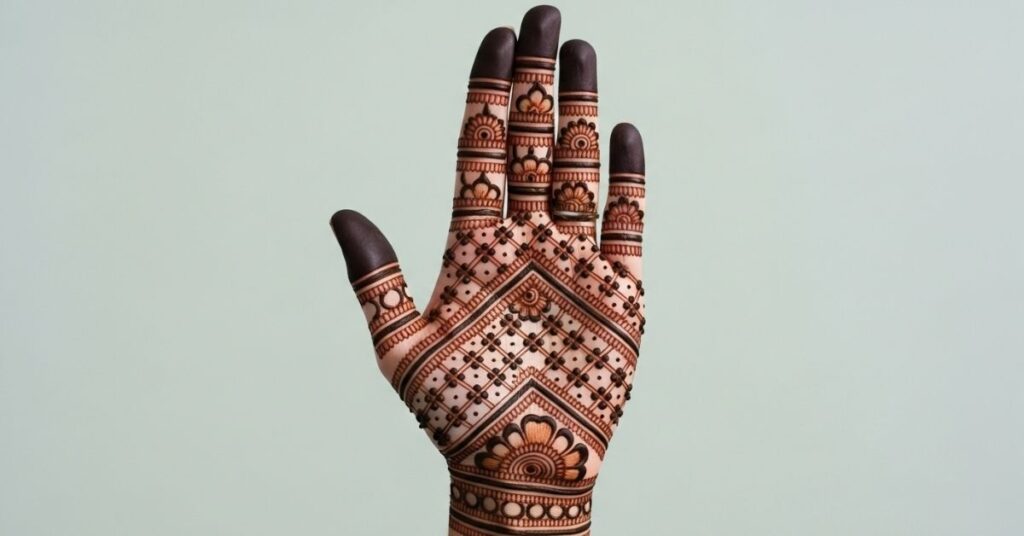
For hand-to-hand symmetry, complete one small section on your first hand, then immediately replicate it on your second hand before moving to the next section. This prevents memory errors about exact placement and proportions. Use a mirror to check symmetry from different angles as you work. The contemporary mehndi with classic elements achieved through symmetrical patterns showcases both modern front hand mehndi sensibilities and respect for traditional precision.
Floral Archway at Your Hands
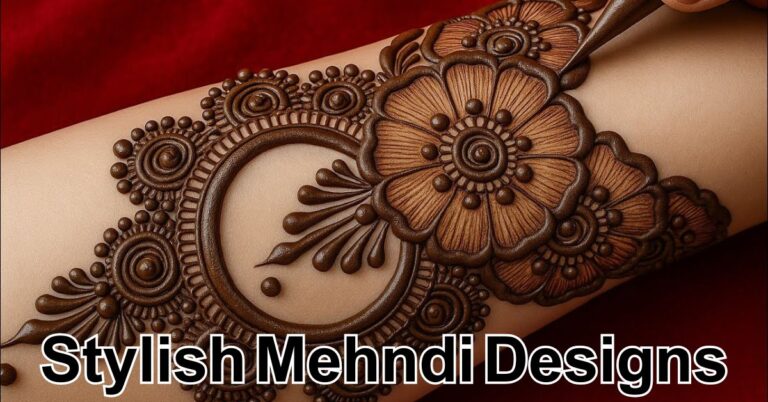
The floral archway concept brings architectural elegance to front hand simple mehndi designs. Imagine a wedding arch covered in cascading flowers now miniaturize that vision onto your hand. This style creates a frame-like effect that draws the eye through the design. The arch can span from the base of your fingers across to your wrist, creating a natural path that follows your hand’s contours. The interior of the arch can remain relatively open with minimal patterns, or you can fill it with intricate floral and geometric motifs for drama.
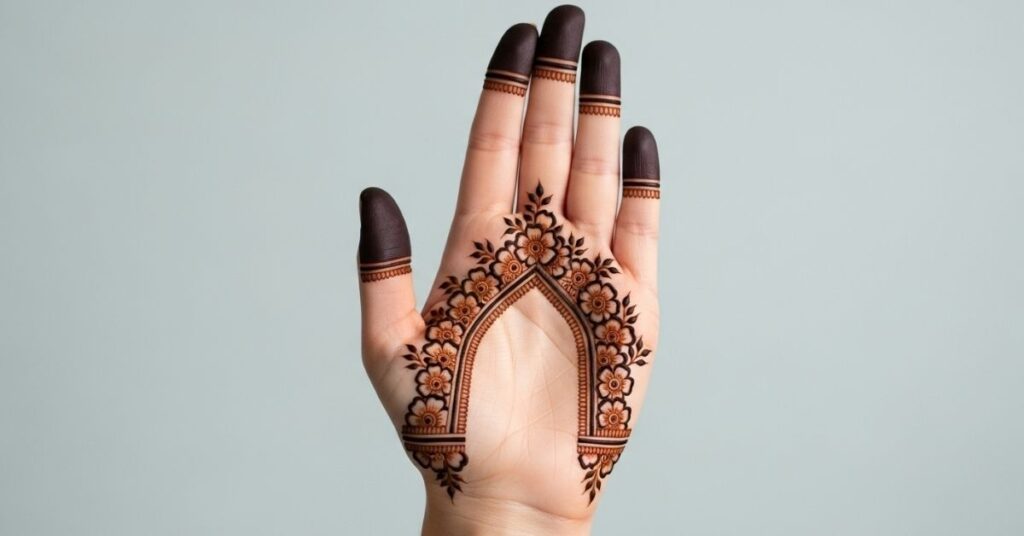
Fill any gaps with delicate paisley shapes or simple dots. Inside the arch, consider adding a central motif like a small mandala or single statement flower. This elegant and stylish mehndi patterns approach works beautifully for wedding front hand mehndi ideas where sophistication and romance blend seamlessly.
Cuff Bracelet with a Mehndi Twist
Cuff style front hand mehndi brings contemporary jewelry aesthetics into henna art. These designs mimic the appearance of ornate bracelets encircling your wrist. The style has gained tremendous popularity in Western countries where women appreciate the jewellery style front hand mehndi that looks like permanent accessories.
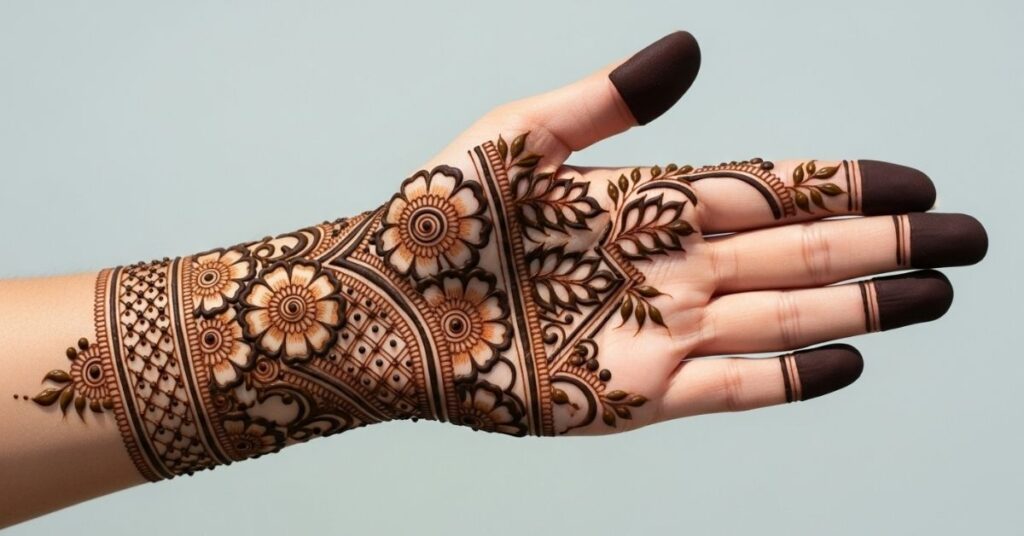
For extra flair, extend a few vine-like elements upward onto your hand or downward toward your fingers like a jewelry chain would drape. The mehndi patterns that enhance hand beauty through cuff designs offer versatility they look stunning alone or can be paired with actual jewelry for layered effect. This fashionable mehndi trends for women option suits professional settings where more elaborate mehndi might feel overwhelming.
Bold Design for a Good Beginning
Bold patterns offer the perfect entry point for mehndi newcomers. Thick lines are easier to control than delicate ones. Wide shapes forgive minor hand tremors or uneven pressure. The dramatic contrast of bold front hand Simple mehndi designs creates immediate visual impact even with simple patterns.
You won’t spend hours filling intricate details, which means less time holding your hand steady and less opportunity for mistakes. Bold designs typically feature chunky paisley shapes, wide borders, and substantial central motifs.
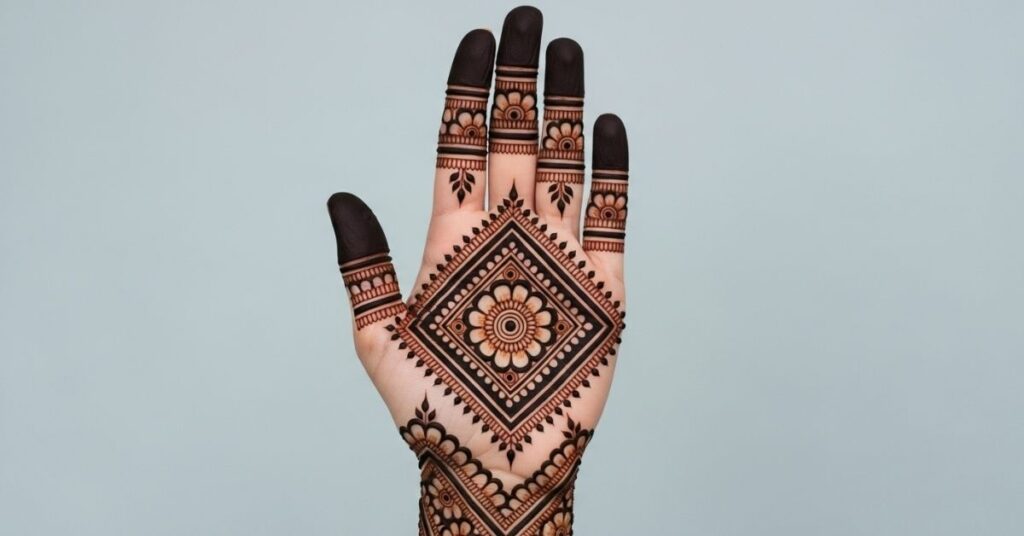
Lotus Mehndi Design
The lotus deserves dedicated attention beyond its role as a motif within larger designs. As a standalone lotus front Simple hand mehndi design centerpiece, this flower commands the entire composition. You can render a lotus in numerous styles: fully opened with all petals visible, partially closed suggesting mystery, or in side profile showing depth and dimension.
Perfecting lotus petals requires understanding their layered structure. Outer petals are largest and most open. Surrounding your lotus with water ripples (concentric partial circles), lily pads, or abstract swirls reinforces the aquatic theme. This mehndi designs inspired by culture and tradition approach honors the lotus’s spiritual significance while creating stunning artistic and detailed mehndi patterns suitable for any occasion.
Front Hand Long Mehndi Design
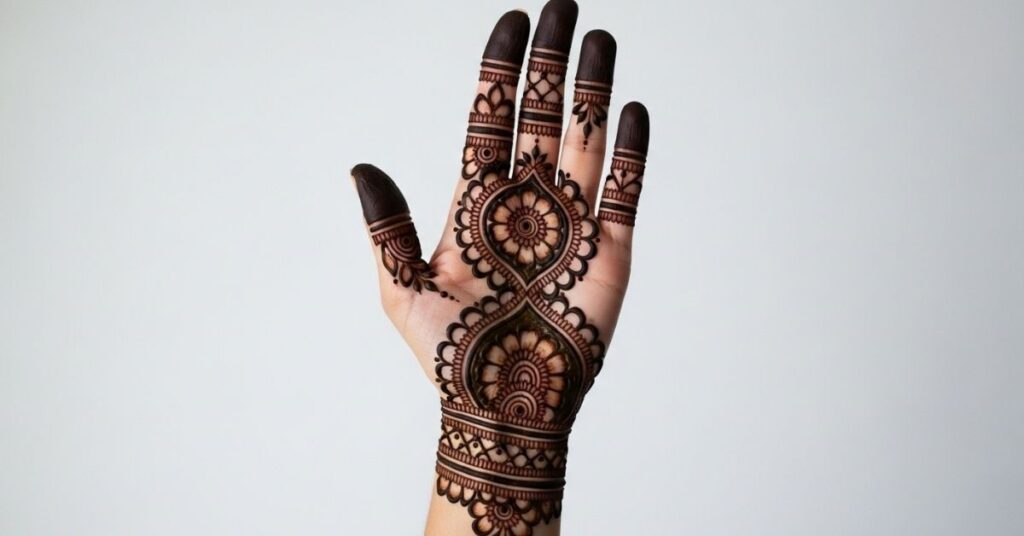
Front full hand mehndi design extending from fingertips to wrist requires careful planning to maintain visual flow. These elongated patterns create elegant continuity that makes hands appear longer and more graceful. The challenge lies in connecting different sections seamlessly so the design reads as one cohesive piece rather than disconnected patches. Long designs work beautifully for mehndi designs for weddings and festivals where elaborate decoration is expected and appreciated.
The wrist area typically features bolder patterns since this section is most visible when your hand rests naturally. Allow 60-90 minutes for a complete long design. The mehndi patterns that enhance hand beauty through extended coverage create dramatic results perfect for statement mehndi designs for special events.
Lotus Motifs for a Chic Bride
Bridal front hand mehndi featuring lotus elements combines spiritual symbolism with breathtaking beauty. Brides choosing lotus-centered designs honor traditions while showcasing elegant and stylish mehndi patterns. The lotus represents the bride’s journey rooted in earth yet blooming toward heaven, maintaining purity while embracing transformation.
For front hand mehndi for brides and bridesmaids, lotus designs can be simplified for bridesmaids while the bride receives the most elaborate version, creating coordinated yet differentiated looks.
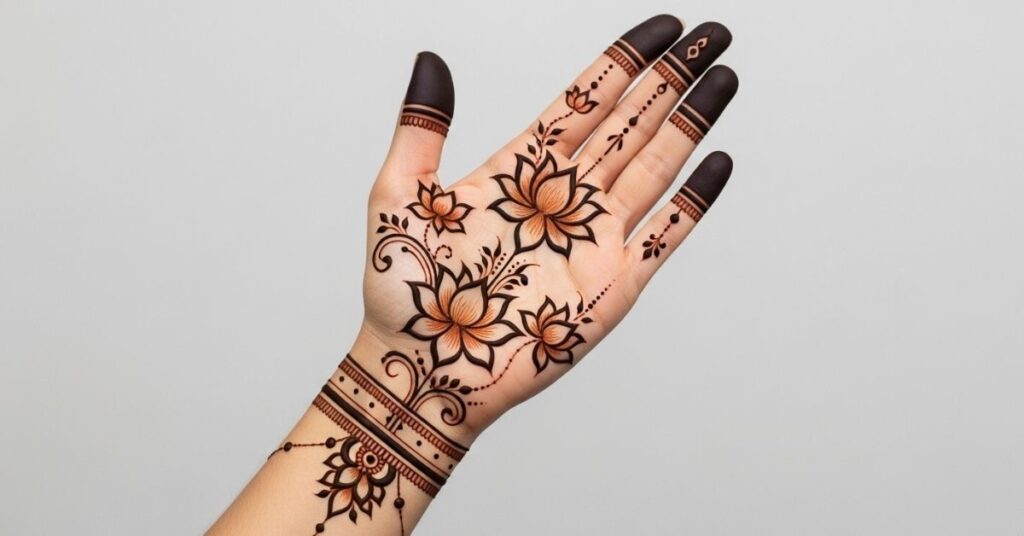
Bridal lotus designs often incorporate personalization elements that make them unique. Consider adding the couple’s initials hidden within petals, the wedding date integrated into the center, or small heart shapes nestled among leaves. Bridal mehndi should be applied 1-2 days before the wedding for optimal color development.
The stain darkens over 24-48 hours, reaching peak intensity around 48-72 hours post-application. Aftercare becomes crucial keep the paste on 6-8 hours minimum, avoid water contact for 12 hours after removal, and apply a lemon-sugar seal before the paste dries. These wedding front hand simple mehndi design featuring lotus motifs create timeless beauty that photographs gorgeously and honors sacred traditions.
Intricate Patterns with a Rose Essence
Roses bring romantic sophistication to front hand simple mehndi design. Unlike simple five-petaled flowers, roses demand attention to layered petal structure that creates depth and realism. The intricate floral and geometric motifs possible with rose designs range from tightly wound rosebuds to fully bloomed flowers with petals unfurling dramatically. Rose-centric designs suit romantic occasions anniversaries, proposals, Valentine’s celebrations, and of course, mehndi designs for weddings and festivals centered on love.
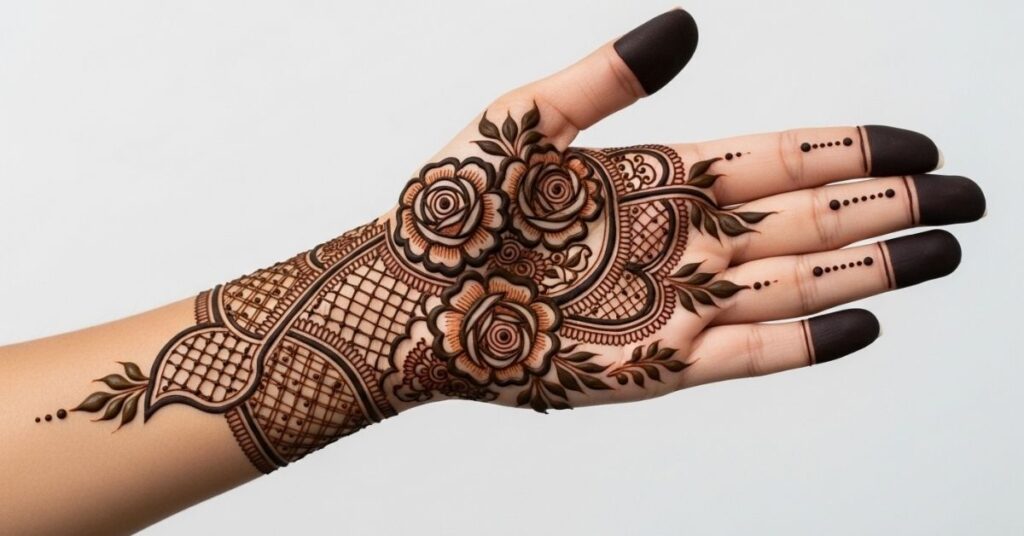
Creating realistic roses in mehndi starts with understanding petal arrangement. Draw a small spiral or tight oval for the rose center. Add the first layer of petals as crescents partially enclosing the center.
Surround your roses with smaller filler flowers, vines, and geometric accents. The artistic and detailed mehndi patterns achieved through careful rose construction elevate your work from amateur to impressive, creating contemporary mehndi with classic elements that feels both fresh and timeless.
The Royal Rajasthani Bridal Mehndi Design for the Full Hand
Royal front hand simple mehndi design reaches its pinnacle in Rajasthani bridal style. This tradition from India’s desert state emphasizes maximum coverage, intricate detail, and traditional motifs passed through generations. Rajasthani designs typically include peacocks, paisleys, elephants, temples, and bride-groom figures. The coverage extends from fingertips past the wrist onto the forearm. Empty space is minimal the entire hand becomes a tapestry of interconnected patterns. This royal mehndi inspired by Indian art represents the ultimate expression of bridal decoration.
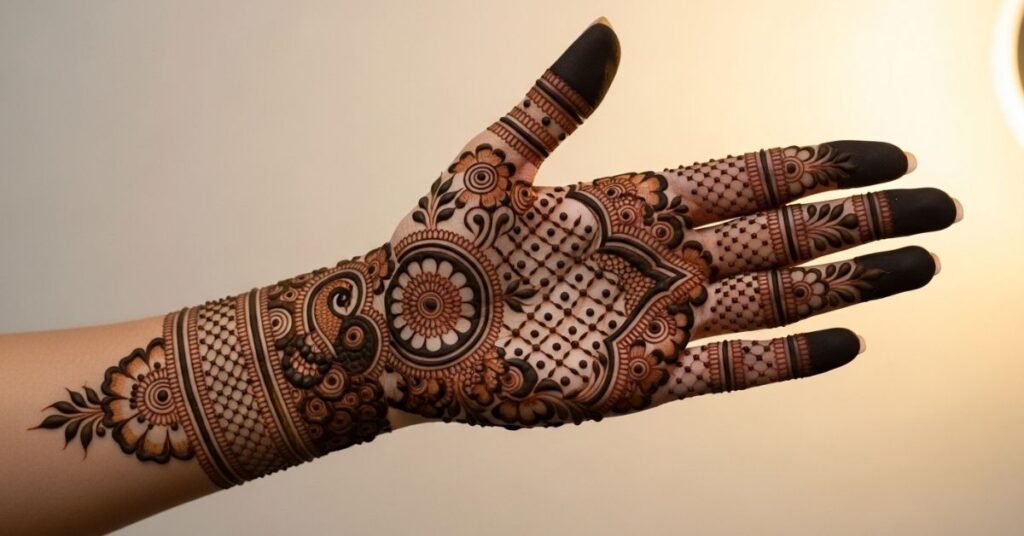
This traditional front hand mehndi style connects contemporary brides with centuries of cultural heritage. The mehndi designs inspired by culture and tradition created through Rajasthani methods are unmistakable in their density, symmetry, and adherence to classic motifs.
Front Hand Heavy Mehndi Design
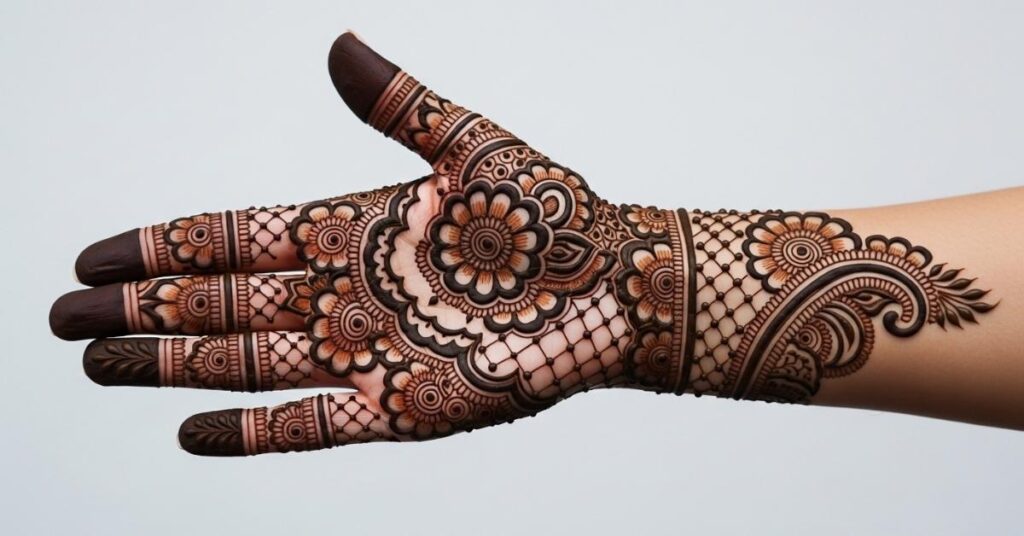
Heavy mehndi doesn’t mean messy or cluttered rather, it describes front full hand mehndi design with substantial coverage and multiple layered elements. These designs feature bold primary motifs supported by intricate secondary patterns and detailed filling work. Heavy mehndi creates drama and formality appropriate for significant celebrations. The weight of the design should be balanced across your hand, avoiding overcrowding in one area while leaving others sparse.
Use techniques like stippling (many small dots), cross-hatching, or tiny repetitive patterns to fill larger shapes. The negative space in heavy designs should be minimal but intentional tiny glimpses of skin highlighting the surrounding patterns. This bridal front hand simple mehndi design approach creates statement mehndi designs for special events that photograph dramatically and withstand visual scrutiny from any distance.
Front Hand Bridal Mehndi Design
Bridal front hand simple mehndi design represents the pinnacle of mehndi artistry for most practitioners. Brides expect perfection, longevity, and designs that photograph beautifully throughout their wedding celebrations.
Bridal designs typically incorporate personal elements: couple’s names hidden within patterns, wedding dates, meaningful symbols, or cultural motifs significant to the families. The coverage level varies by cultural tradition and personal preference, ranging from delicate minimal patterns to full elaborate coverage.
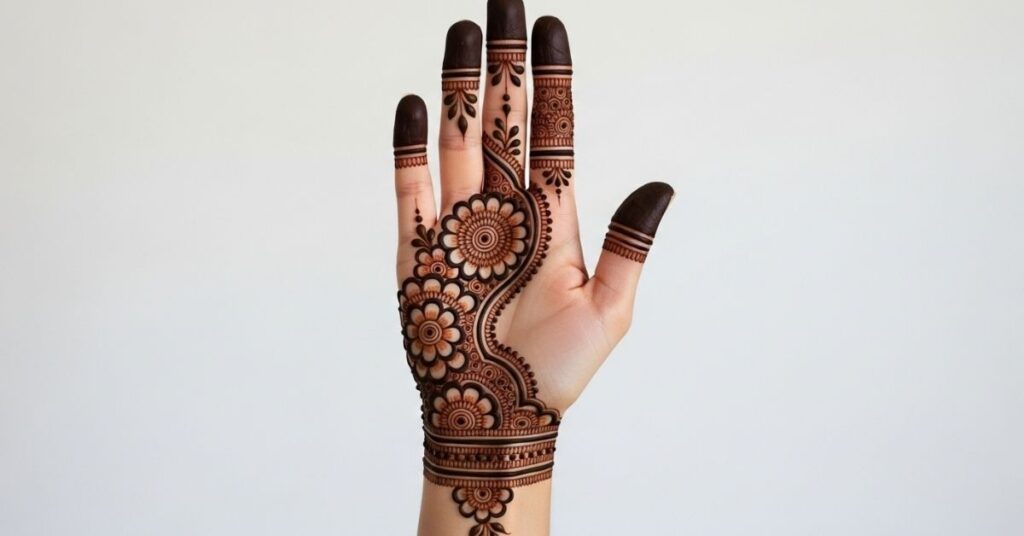
Front Hand Mehndi Design for Eid
Eid celebrations bring joy, community, and beautiful decoration including special front hand simple mehndi designs. Eid mehndi tends toward celebratory motifs crescent moons, stars, geometric Islamic patterns, and abundant floral elements. The designs balance festivity with the quickness needed during busy Eid preparations. Many women apply mehndi on Chand Raat (the night before Eid) in communal settings with family and friends, making speed and simplicity important considerations.
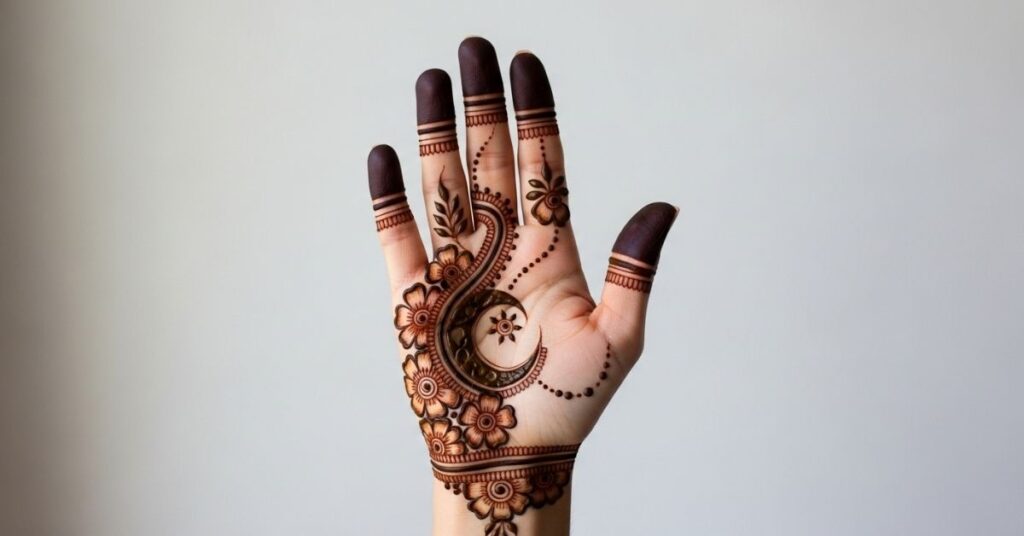
Eid-appropriate patterns often feature symbolic elements meaningful in Islamic tradition. Crescents and stars appear frequently, representing the lunar calendar that determines Eid’s arrival. Geometric patterns reflecting Islamic art’s emphasis on abstract beauty create sophisticated yet relatively quick designs.
Floral elements add celebratory cheer without specific religious symbolism. These mehndi designs for weddings and festivals suited to Eid typically require 30-60 minutes per hand, allowing women to beautify themselves without sacrificing the entire evening. The elegant and stylish mehndi patterns created for Eid should feel joyful and festive, marking the celebration while remaining modest and appropriate for the occasion’s spiritual significance.
Front Hand Mehndi Design for Teej
Teej festival honors the monsoon season and celebrates marital devotion in Hindu tradition. Women wear green and red, swing on decorated jhulas (swings), and apply festive front hand simple mehndi designs as part of their celebrations. Teej mehndi often incorporates monsoon-related imagery raindrops, clouds, umbrellas, swings, and abundant flowers representing nature’s renewal. The color palette inspiration comes from Teej’s traditional green and red theme, sometimes leading women to add colored mehndi or embellishments.
Creating Teej-specific designs means embracing whimsical, joyful motifs. Draw a decorative swing with a small female figure seated on it, surrounded by flowers and vines. Raindrops can be represented by small teardrops scattered throughout the design or as a border element.
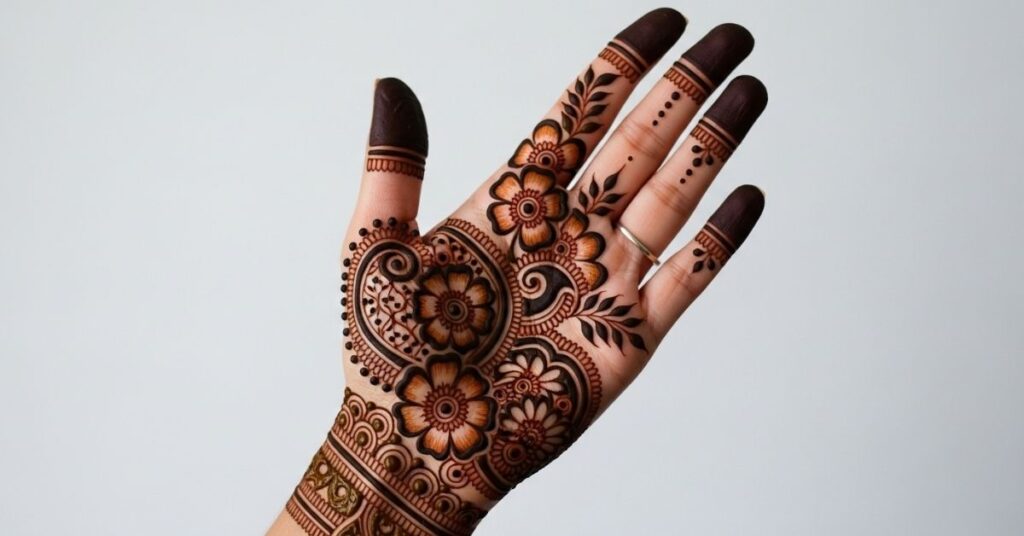
Peacocks are particularly appropriate since they dance during monsoons. Mango motifs (another monsoon symbol) appear as paisley shapes. These front hand simple mehndi design inspired by culture and tradition connect contemporary celebrations with ancient festival observance. The fashionable mehndi trends for women celebrating Teej blend traditional symbolism with personal creative expression, resulting in designs that feel both culturally grounded and individually unique.
Front Hand Simple Mehndi Design for Diwali
Diwali, the festival of lights, inspires front hand simple mehndi designs featuring diyas (oil lamps), rangoli patterns, Om symbols, and prosperity motifs. The mehndi applied for Diwali should feel luminous and auspicious, reflecting the festival’s themes of light conquering darkness and prosperity entering homes. Many families apply mehndi as part of their Diwali preparations, often accompanied by traditional sweets and celebration.
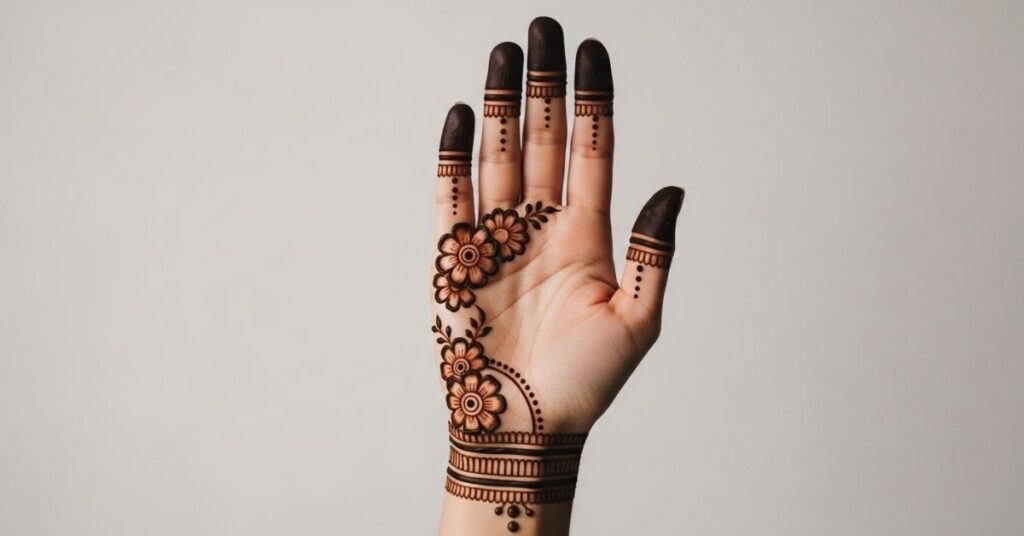
Diwali mehndi designs frequently incorporate recognizable festival symbols. Diyas appear as small teardrop shapes with flame patterns at the top, often arranged in rows or circles mimicking actual diya placement during the festival. Rangoli-inspired geometric patterns circles, squares, flower patterns translate beautifully into mehndi. Sacred symbols like Om, swastikas (in the Hindu auspicious sense), or lotus flowers add spiritual significance.
Some women add golden glitter, colored mehndi, or embellishments to create the sparkle associated with Diwali decorations. These mehndi designs for weddings and festivals specific to Diwali take 45-75 minutes depending on complexity. The statement mehndi designs for special events created for this major festival carry both aesthetic beauty and deep cultural meaning that enhances the celebration.
| Aspect | Details |
|---|---|
| Theme | Diwali, festival of lights |
| Elements | Diyas, rangoli, Om, lotus |
| Meaning | Light over darkness, prosperity |
| Tips | Add glitter or colors for sparkle |
| Time | 45–75 mins |
| Occasion | Diwali, festivals, weddings |
Traditional Front Hand Simple Mehndi Design
Traditional front hand mehndi encompasses centuries of established patterns, regional variations, and culturally significant motifs passed through generations. These designs maintain connection to heritage and honor the practices of ancestors. Indian traditional designs emphasize complete coverage and intricate filling.
Pakistani traditional mehndi features bold architectural patterns and detailed floral work. Arabic traditional styles focus on large floral vines with minimal filling and generous negative space. Persian designs incorporate subtle, delicate patterns with calligraphic elements.
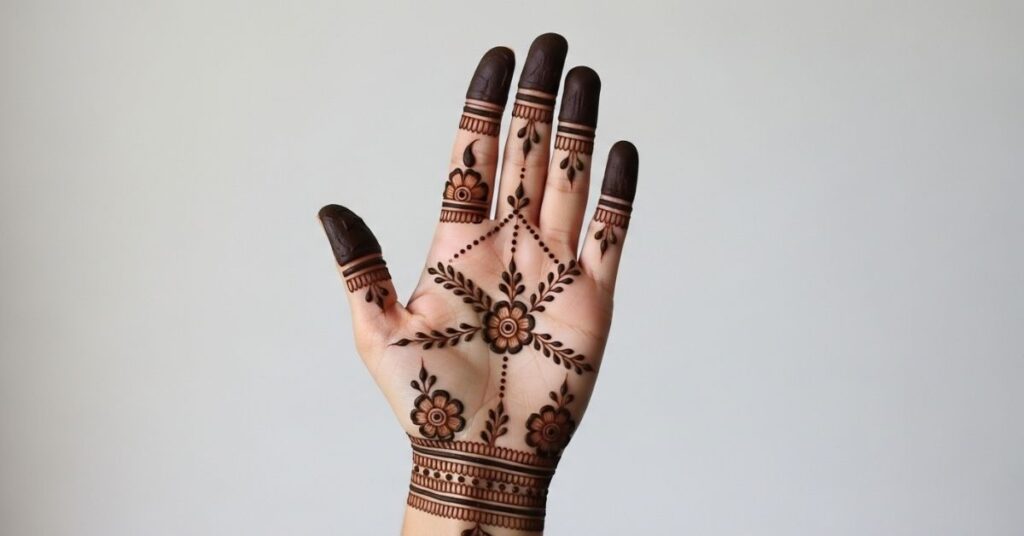
Learning traditional front hand Simple mehndi design provides foundation for all other styles. The basic motifs paisley, peacock, lotus, mango, fish carry specific cultural meanings. Paisley represents fertility and life. Peacocks symbolize beauty and grace. Lotus signifies purity and spiritual awakening. Mango (or kairi) shapes represent new beginnings. Fish symbolize wealth and abundance.
Understanding these meanings helps create culturally respectful and symbolically rich designs. Traditional filling techniques like jaali (net pattern), bharat (dense filling with checks or dots), and bel (vine borders) provide the detail that distinguishes amateur work from skilled artistry. These mehndi designs inspired by culture and tradition offer elegant and stylish mehndi patterns that never go out of fashion because they’re rooted in timeless cultural expression.
Front Hand Arabic Mehndi Design
Arabic front hand simple mehndi design stands out for its bold, flowing aesthetic and relatively quick application time. This style originated in Middle Eastern countries and emphasizes large floral motifs, sweeping vines, and dramatic negative space. Unlike dense Indian designs that cover every inch, Arabic patterns allow skin to show through prominently. The contrast between bold mehndi and bare skin creates striking visual impact. Large flowers, leaves, and vines dominate, with minimal intricate filling inside shapes.
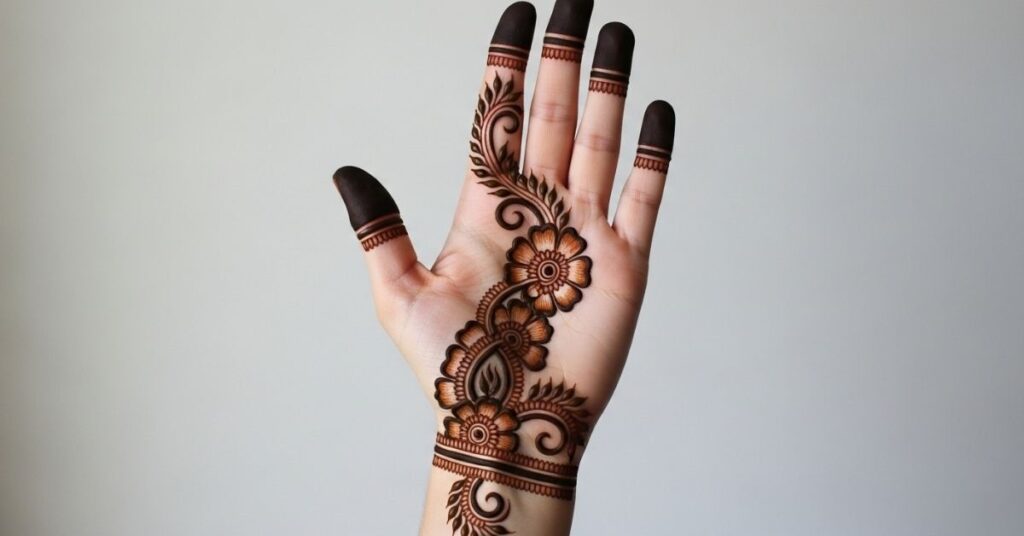
Creating Arabic front handSimple mehndi design suits beginners particularly well because the style is forgiving. Bold lines hide minor shakiness better than fine details. The reduced coverage means less time applying mehndi, typically 20-40 minutes for a full hand. Start with a thick vine flowing from wrist toward fingers.
Add large flowers along the vine at intervals roses, abstract blooms, or simple five-petaled flowers. Insert leaves between flowers. Extend smaller vine branches into empty spaces. Fill flower centers with simple patterns circles, dots, or basic mandala elements. The minimal yet elegant mehndi styles achieved through Arabic techniques appeal especially to Western audiences and professional settings where subtle sophistication trumps elaborate coverage.
Why Arabic Designs Suit Beginners
Arabic front hand mehndi design offers multiple advantages for those new to henna art. The larger pattern elements are easier to control than microscopic details required in traditional Indian work. Your hand doesn’t need to remain perfectly steady for extended periods. If you make a mistake, the bold nature of the style allows you to adjust or incorporate the error into the overall flow.
The quick application time means less hand fatigue and less opportunity for your design to go wrong.The forgiving nature of Arabic patterns comes from their organic, free-flowing aesthetic. There’s no expectation of perfect symmetry or precise geometric accuracy. Each vine can flow slightly differently.
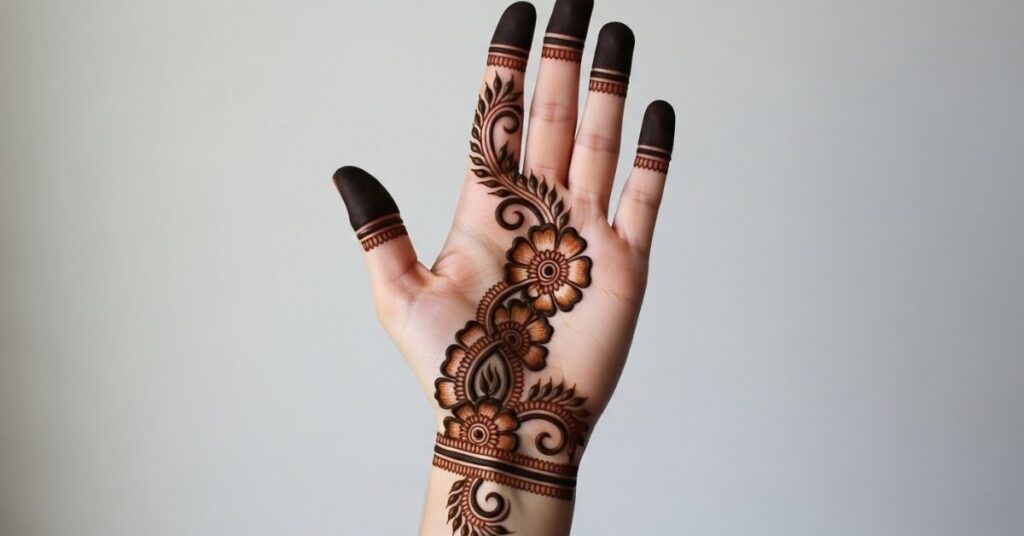
Flowers can vary in size. This flexibility removes pressure from beginners who might feel intimidated by rigid traditional styles. The modern front hand Simple mehndi design sensibility of Arabic designs also means they look contemporary and fashionable rather than exclusively traditional, making them appropriate for diverse occasions and audiences.
Front Hand Mehndi Design for Kids
Children love the excitement of getting decorated like adults, but front hand Simple mehndi designs for kids require special considerations. Safety comes first ensure you’re using natural, organic mehndi paste without chemical additives. Test a small area first to check for sensitivities. Kids often struggle to sit still for extended periods, so designs should be completable in 10-20 minutes maximum. Choose playful, recognizable patterns that children will appreciate: stars, hearts, simple flowers, butterflies, or their favorite animals simplified into basic shapes.
Child-friendly mehndi application requires speed and engagement. Talk to the child throughout the process, explaining what you’re creating. Let them choose between a few design options. Keep patterns to one hand or one hand section if sitting still becomes challenging.
Use bold lines that apply quickly rather than intricate details requiring precision. Consider themes from their interests if they love dinosaurs, create a simple stegosaurus outline; if they adore unicorns, draw a basic unicorn head with a flowing mane. These front hand simple mehndi design suitable for all occasions adapted for children create special memories while introducing them to cultural traditions in age-appropriate ways.
Simple Mehndi Design for Kids
Ultra-simple patterns work best for very young children or first-time kid experiences with mehndi. These designs feature basic geometric shapes, simple outlines, and minimal detail. A large flower on the hand back with a few leaves takes mere minutes. A bracelet-style pattern around the wrist satisfies without requiring the whole hand. Individual finger decorations like tiny hearts, stars, or flowers on each fingertip create playful results quickly.
The key to successful kids’ mehndi lies in managing expectations and patience levels. Very young children might only tolerate 5 minutes of stillness. Design accordingly. One medium flower plus a few surrounding elements might be the limit. Older children approaching teenage years can handle more complex patterns and longer sitting times.
For all ages, make the experience fun rather than a test of endurance. Praise their patience. Let them admire their decorated hands frequently. These positive associations with front hand simple mehndi design patterns that enhance hand beauty create lasting appreciation for the art form as children grow.
Lovely Flower Design for the Little Hands
Flower patterns scaled appropriately for small hands create adorable results that make children feel special and grown-up. A single large flower centered on the hand back works wonderfully choose a simple five-petaled flower or a daisy-like bloom. Add a few leaves around the flower. Draw a simple vine extending to the wrist with tiny buds along its length. Keep finger decorations minimal perhaps a tiny flower at the base of each finger or simple dots creating a ring effect.
Scale matters tremendously when working on children’s smaller hands. Patterns appropriate for adult hands overwhelm little hands. Reduce the size and quantity of elements. One well-executed flower looks better than three cramped flowers competing for space.
Use this opportunity to teach children about mehndi traditions in simple terms explain that it’s made from plants, that many cultures celebrate with mehndi, and that it’ll fade away in about two weeks. This educational component enriches the experience beyond mere decoration, creating front hand simple mehndi design inspired by culture and tradition that carry meaning for the next generation.
Trendy Lotus Mehndi Design
Trendy front hand simple mehndi design 2025 interpretations of the lotus blend traditional symbolism with contemporary aesthetics. Modern lotus designs incorporate geometric elements, minimalist approaches, or unexpected placements. Instead of a centered, perfectly symmetrical lotus, trendy versions might show the flower in side profile or use abstract geometric shapes to suggest lotus rather than render it realistically. Some artists create lotus mandala hybrids, using mandala construction techniques within the lotus form.
Contemporary lotus designs often embrace negative space more boldly than traditional versions. A large lotus outline with minimal interior detail creates striking modern impact. Another trendy approach involves connecting multiple small lotuses in a chain or cluster pattern rather than featuring one large central bloom. Color additions white mehndi highlights, glitter centers, or colored stone embellishments push lotus designs into fashion-forward territory.
These contemporary mehndi with classic elements interpretations honor the lotus’s enduring significance while making it feel fresh and current. The fashionable mehndi trends for women seeking something between totally traditional and completely avant-garde find perfect expression in updated lotus designs.
Front Hand Flower Mehndi Design
Floral front hand mehndi offers endless variation depending on which flowers you choose and how you arrange them. Different blooms create distinct moods and aesthetics. Delicate jasmine-inspired flowers create feminine, romantic designs. Bold sunflowers bring cheerful energy. Abstract flowers that don’t match specific species allow total creative freedom. You can create a flower garden effect with multiple varieties or commit to a single flower type repeated throughout the design for cohesive impact.
Arranging flowers effectively across your hand requires considering size, spacing, and connection elements. Large statement flowers work best as focal points center back of hand, center palm, or base of fingers. Medium flowers support these primaries, filling space without competing for attention.
Tiny flower buds or simple blooms fill gaps and create visual texture. Connect your flowers with vines, stems, or leaves for continuity. The intricate floral and geometric motifs possible when combining flowers with other elements create rich, complex designs. These mehndi patterns that enhance hand beauty through thoughtful floral composition suit any aesthetic preference from boldly dramatic to delicately subtle.
Front Hand Rose Mehndi Design
Roses command special attention in front hand mehndi designs because of their complex petal structure and universal recognition. A well-executed rose immediately elevates a design from basic to sophisticated. Roses work beautifully as central focal points or as accent elements scattered throughout larger compositions. The layered petal construction creates natural depth even in two-dimensional mehndi, making roses appear three-dimensional and lifelike.
Creating realistic roses requires understanding petal mechanics. Begin with a tight spiral or small oval representing the rose center. Add the first inner petals as small crescents hugging this center. The elegant and stylish mehndi patterns achieved through skilled rose rendering create artistic and detailed mehndi patterns suitable for the most formal occasions.
Rose Placement Strategies
Roses function effectively as either primary focal elements or supporting accents depending on your overall design vision. As a central focus, position one large rose on the hand back with all other elements radiating from or supporting it. This creates clear visual hierarchy and immediate impact.
Roses as accent elements support other primary motifs without overpowering them. Small roses tucked between peacock feathers, nestled in mandala corners, or climbing along vine elements add romantic detail. These strategic placement decisions transform simple rose inclusion into thoughtful front hand simple mehndi design suitable for all occasions that demonstrate artistic maturity and intentional composition.
Front Hand Peacock Mehndi Design
Peacock front hand simple mehndi design represents one of the most beloved traditional motifs in henna art. The peacock’s association with grace, beauty, and divine symbolism makes it appropriate for celebrations from weddings to festivals. Peacocks can be rendered in numerous styles fully realistic with detailed feathers, stylized and simplified, or abstract suggestions of peacock essence.
Drawing a peacock begins with its characteristic profile. Sketch the small head with its fan-shaped crest. Extend the graceful S-curved neck downward to a plump, rounded body. The tail the peacock’s glory flows from the body in multiple long, elegant feathers. Surround the bird with intricate floral and geometric motifs like flowers, leaves, and paisley shapes. This royal mehndi inspired by Indian art creates statement mehndi designs for special events with undeniable impact.
Latest Front Hand Mehndi Design
Latest front hand mehndi design trends for 2024-2025 embrace fusion aesthetics, minimalist approaches, and unexpected combinations. Contemporary designs increasingly blend traditional motifs with modern elements. Geometric shapes interact with organic florals. Western jewelry aesthetics merge with Eastern mehndi tradition.
The contemporary mehndi with classic elements aesthetic dominates trendy designs, honoring tradition while pushing boundaries. Following professional mehndi artists on Instagram, Pinterest, and TikTok provides endless inspiration. The fashionable mehndi trends for women constantly evolve, making latest front hand mehndi design a dynamic, exciting category that rewards creativity and experimentation.
Heart Shape Mehndi Design for Front Hand
Heart motifs bring romantic symbolism perfect for wedding front hand mehndi ideas or Valentine’s Day celebrations. Hearts can function as standalone focal elements, be hidden within larger designs, or repeated as a decorative pattern throughout. The universally recognized shape communicates love and affection without words. Heart-based designs suit anniversaries, romantic dates, or anytime you want to incorporate sweet sentimentality into your mehndi.
Multiple small hearts scattered among other design elements add romantic touches without overwhelming. Connect hearts with vines, arrows (Cupid references), or small flowers. Consider double-heart shapes representing couple unity. These elegant and stylish back hand mehndi design incorporating hearts create mehndi designs suitable for all occasions where love and celebration intersect.
Front Hand Square Mehndi Design
Geometric square patterns bring modern front hand simple mehndi design energy with their architectural precision and contemporary feel. Squares and rectangular shapes create grid-like frameworks within which other elements nest. Square-based designs feel modern, structured, and slightly unconventional perfect for those seeking alternatives to purely floral patterns.
Constructing square designs requires planning your grid structure first. Decide whether you want one large central square, multiple small squares creating a checkerboard effect, or overlapping squares at different angles. These contemporary mehndi with classic elements designs appeal to minimalist aesthetics while maintaining the decorative richness mehndi is known for. The fashionable mehndi trends for women increasingly embrace geometric approaches as counterpoint to traditional florals.
Mandala Front Hand Simple Mehndi Design
Mandala front hand simple mehndi design deserves extensive exploration because of its versatility and universal appeal. These circular, radiating patterns adapt to various sizes and placement locations. Small mandalas on fingertips create delicate detail. Medium mandalas at the hand center provide focal points.
Advanced mandala techniques involve complex layering and pattern variation within each layer. Start with your central point often a small circle or dot. Build your first layer around this center using simple shapes like petals, triangles, or arches.
Add extra detail within each layer tiny dots along petal edges, fine lines bisecting shapes, or small circles at junction points. The graceful and symmetrical mehndi layouts achieved through careful mandala construction demonstrate skill and patience. These artistic and detailed mehndi patterns work for any aesthetic preference and skill level.
Front Full Hand Simple Mehndi Designs
Achieving full-hand coverage while maintaining simplicity requires strategic design choices. Front full hand mehndi design doesn’t need extreme intricacy to look complete and polished. Use repetitive patterns that you can execute quickly and consistently.
Divide your hand into sections when planning simple full coverage. Assign each section a specific element: fingers get simple bands or tiny repetitive motifs, finger bases receive small flowers, hand back hosts your primary design element (perhaps a medium mandala or floral cluster), and wrist gets a bracelet-style border.
Leave intentional negative space in strategic places rather than cramming every millimeter. This approach to easy front hand simple mehndi design creates minimal yet elegant mehndi styles appropriate for any occasion while remaining manageable for intermediate skill levels.
Front Hand Simple Arabic Mehndi Design Ideas
Arabic front hand mehndi design simplicity offers multiple advantages: quick application, bold visual impact, and beginner-friendly execution. These designs typically feature flowing vines as the backbone structure with large flowers positioned along the vine at intervals. Leaves fill spaces between flowers. The interior of flowers might contain simple patterns or remain relatively open. This formula can be endlessly varied by changing flower types, vine direction, and leaf styles.
Five quick Arabic pattern ideas include: First, a single thick vine flowing diagonally across the hand back with three large roses and leaves. Second, a symmetrical design with two vines extending from the wrist upward, each adorned with flowers. Fifth, a bold paisley as primary element with vines and small flowers as accents. These minimal yet elegant mehndi styles exemplify how modernfront hand simple mehndi design adapts traditional elements for contemporary preferences. The mehndi designs suitable for all occasions created through simple Arabic approaches suit professional settings, casual celebrations, and formal events equally well.
Simple Front Hand Circle Mehndi Designs
Circle-based patterns create organic, flowing front hand circle mehndi designs with universal appeal. Circles represent wholeness, unity, and continuity in many cultures. Chain-like connections of circles create movement across your hand. Concentric circles build complexity through layering. Circle clusters suggest flowers or decorative medallions. The softness of circular shapes contrasts beautifully with angular geometric elements if you choose to combine them.
Connect circles with curved lines, small leaves, or dots suggesting movement between elements. These elegant and stylish mehndi patterns using circles create graceful and symmetrical mehndi layouts that feel both traditional and contemporary. The versatility of circle-based designs makes them front hand simple mehndi design suitable for all occasions from casual to ceremonial.
Front Hand Simple Flower Mehndi Designs
Basic flower construction forms the foundation of most floral front hand mehndi work. Mastering simple flowers allows you to create beautiful designs quickly without advanced technical skills. Five-petaled flowers are easiest draw a small circle for the center, then add five teardrop or oval shapes around the circle as petals. Four-petaled flowers create a cross-like appearance. Three-petaled flowers suggest tulips or simplified lotus views. Abstract flowers without specific petal counts offer creative freedom.
Creating variety within simple flowers prevents monotonous repetition. Alter petal shapes some flowers with rounded petals, others with pointed petals. Vary flower sizes throughout your design. These variations using basic building blocks create intricate floral and geometric motifs that look complex but rely on simple, repeatable elements. The mehndi patterns that enhance hand beauty through thoughtful flower arrangement prove that simplicity and beauty aren’t mutually exclusive.
Khafif and Dubai Front Hand Simple Mehndi Design
Minimal front hand simple mehndi design reaches its aesthetic peak in khafif and Dubai styles. Khafif, meaning “light” in Arabic, embraces minimal coverage with maximum impact. These designs feature strategic placement of a few key elements surrounded by generous negative space. The sophistication comes from restraint resisting the urge to fill every space creates elegant breathing room. Khafif suits professional settings, understated personalities, and occasions where subtle enhancement trumps dramatic statement.
Dubai style blends Arabic front hand simple mehndi design boldness with Indian detail complexity. These fusion designs typically feature bold structural elements (thick vines, large shapes) filled with intricate interior patterns. The result combines Arabic flow with Indian elaboration.
Applying Khafif Designs Successfully
Success with khafif designs requires confident stroke work and strategic element placement. Each element must justify its presence there’s no room for filler or thoughtless additions. Choose 3-5 key elements total for your design. Position them with intention considering hand anatomy and natural eye flow. A central mandala on the hand back plus a delicate vine extending to one finger plus a wrist bracelet element might constitute a complete khafif mehndi design. The space between elements is as important as the elements themselves.
However, this style rewards practitioners with sophisticated, timeless elegant and stylish mehndi patterns that photograph beautifully and suit diverse contexts. The contemporary mehndi with classic elements philosophy of khafif represents mehndi art’s evolution for modern audiences while maintaining respect for tradition.
Conclusion
The world of beautiful front hand simple mehndi design offers something for every skill level, aesthetic preference, and occasion. From bold Arabic front hand simple mehndi design patterns perfect for beginners to intricate royal front hand mehndi design worthy of brides, this ancient art form continues evolving while honoring tradition.
You’ve explored lotus symbolism, mandala construction, peacock majesty, and floral abundance. You’ve learned about festival-specific designs for Eid, Teej, and Diwali. You’ve discovered how minimal front hand mehndi creates sophistication through restraint, and how bridal front hand mehndi carries personal meaning through customization.The journey from beginner to skilled mehndi artist happens one design at a time.
Start with simple front hand mehndi patterns that build confidence. Progress to modern front hand mehndi fusion styles as your skills develop. Eventually, you might master traditional front hand mehndi in its full complexity, or develop your unique style blending multiple influences. Remember that mehndi is temporary each design exists as a moment in time, allowing endless experimentation without permanent commitment.
Aarohi Verma is a mehndi artist with 8 years of experience creating elegant, modern, and traditional designs. She shares trending patterns and creative henna ideas on Mehndi Design Trend to inspire every occasion.